Truth vs Hope

Posted in Post Injury and Illness, Uncategorized, What is Therapy on September 8th, 2010 by jasontross – Be the first to comment

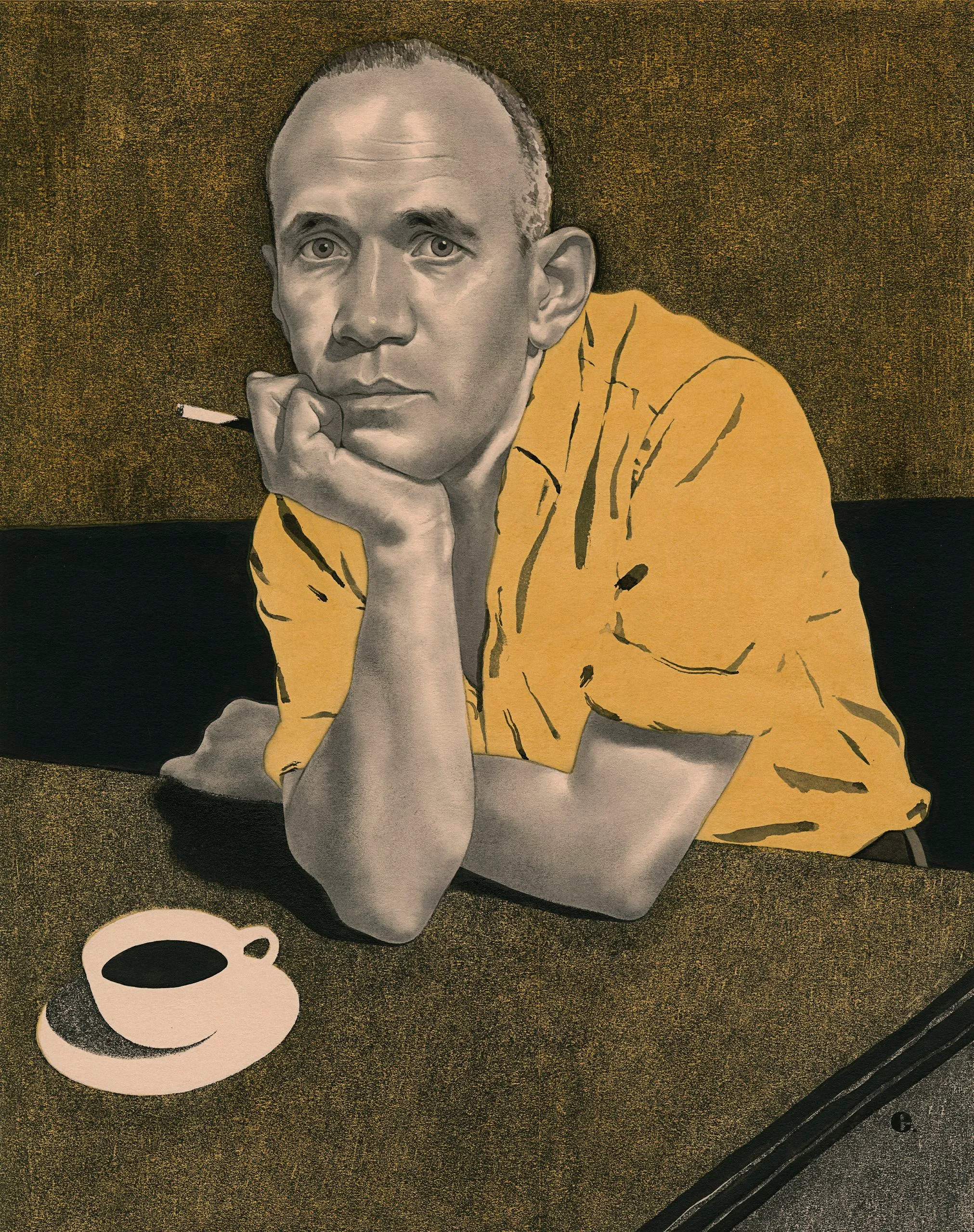
Lately, colleagues and I have been debating the issue of “prognosis”. More specifically, when it comes to people with severe illnesses or injuries, in a physical rehabilitation setting: how, when and if we should communicate “prognosis” to them? There seem to be two camps of thinking when it comes to this. On the one hand, there are those who feel the professional obligation to introduce patients to the “truth” about their circumstances. Alternatively, there are some of us who feel that “hope”, even if completely unrealistic, should be kept alive. Although I, without a doubt, camp steadfast on the pro-hope side, I have nevertheless become interested in the counter argument. For example, just the other day I was surprised to read in Jamie Fox’s Always Looking Up; “We do so much to protect ourselves from the truth, but what I have learned and drawn strength and comfort from, especially over the last seventeen years or so, is that the truth protects us from ourselves. That is, of course, if we can recognize it and trust it.” He goes on to quote Henry Davis Thoreau, in saying “in dealing with the truth we are immortal, and need fear no change nor accident”. As a long time sufferer of Parkinson’s Disease, I take Jamie Fox’s sentiments seriously and it reinforces the nagging, more traditional psychological voice, in the back of my head, that sometimes encourages me to “stick to the facts”. You see, I have come to follow a school of thought in psychology that has become increasingly reluctant to see us as therapists as Gate Keepers to peoples’ experiences. Therefore, I am reluctant to see it as my job to introduce patients to the, so called, “truth” about their situation. Is it my job to try and convince someone with a spinal cord injury that they are likely to never walk again? What if HOPE is sometimes the only thing that is getting you through the unimaginable difficulty and change that illness or injury introduces into your life? And I ask myself, do I have any business crushing such hopes (no matter how delusional)?

South African Artist, Duncan Stewart, writes: “How would you define Hope? To my mind it is like fuel that propels our bodies to pursue certain actions, the consequences of which we believe, correctly or not, will bring us a form of reward akin to pleasure, fulfilment, satisfaction and significance. Hope is very close to belief and belief, in turn, is close to faith. Faith is the substance of things hoped for, the evidence of things unseen. Faith also requires action or propulsion in a certain direction…an activity inspired by what one believes.” What this quote may argue, on my behalf, is that if you take away hope, belief or faith, you risk robbing someone of their “propulsion”. In a rehabilitation setting, the will to act, to move and to propel yourself is, surely, paramount? Why then, as therapists, do we see it as our “job” to stick to the supposed “truth”? Why are we so obsessed with thinking about the trauma of the past rather than the promise of an imagined future?

And then, just to burst my bubble, a previous patient who had suffered an horrific gunshot wound to the back and who has been so courageous in her battle with being in a wheelchair (at least for now), came back to see me, very agitated, saying – “No one prepared me for this…No one let me know it was going to be this mentally tiring to be out there.” I could not help but translate her “No one” into a “you”. Was she suggesting that it was my job to be more truthful with her and hence, prepare her better for life post-injury? Are clients sometimes calling for the “truth”, a responsibility that I am shying away from out of blind dedication to a more “postmodern psychology” or in order to order to avoid upsetting anyone?

Patients continue to defy their prognosis and I choose to continue to camp on the side of HOPE. But, there are perhaps times when you need to lend a few truths here and there to help equip you for the grueling journey of recovery. I think, if you listen close enough, clients usually ask for this when they feel they need it.

The limiting defintion of Disability and the defiance of prognosis

Posted in Post Injury and Illness on July 6th, 2010 by jasontross – Be the first to comment

In this lecture by Aimee Mullins, she explores the definition of  “disablilty” and how it in no ways resonates with her experience of  herself.  She talks about the role of adversity in her life and how her prognosis was something that she lived to defy.
Aimee Mullins on Disablilty, Adversity and Prognosis

Locked In

Posted in Post Injury and Illness on November 28th, 2009 by jasontross – 2 Comments

I was surprised, when opening the Mail & Guardian this weekend, to find a story titled “Locked in a coma for 23 years” (see online version here).  It speaks about a man, Rom Houben, who was apparently thought to have been in a coma for the last 23 years.  The headline for the story is a bit misleading as the most tragic part of this story is that Rom Houben has, in fact, not been in a coma.  It is tragic enough to suffer from “locked in syndrome”, for no matter how short a period.  For instance, many people who develop advanced Guillain Barre Syndrome get to, unfortunately, experience this for a relatively brief period of time.  But, Rom Houbon as been (at least from some point in the last 23 years) been conscious and yet mistaken for having been in a coma.  To suffer from “locked in syndrome” is tragic and frustrating enough.  To suffer from it and be treated as if you are in a coma – be treated as if you have no conscious awareness of yourself and the world around you – is devastating.  One would think that, these days, such a misdiagnosis would have been truly unlikely.  To add to the tragedy of this story, is the fact that over the past 23 years he has missed out on the various therapies that might have been able to somewhat improve his condition. Or, at the very least, help him communicate with the outside world.

Ultimately, Rom houbon’s story leaves me with a few thoughts:
1)    How remarkable is the human mind that, for all these years, he has survived by travelling “with my thoughts into the past, or into another existence altogether.”  Perhaps he had no choice?  Who knows, perhaps it is possible for one to ‘will’ oneself to death?  But, he managed to live with nothing but his own thoughts.
2)    How often does this happen to a greater or lesser extent?  How often, based on what little function we can see from a neurologically traumatised patient, do we take for granted that they don’t have certain thoughts or feelings of their own?  How often do we speak about patients, rather than to them – simply because they cannot respond or based on the assumption that do not understand?
3)    To what extent do we understand the experience of ‘coma’ and how do we reliably distinguish between coma and “locked in syndrome”?  Yes, there are measures like the Glasgow Coma Scale, but do they really suffice in allowing us to understand how consciousness functions within the confines of a coma?  In terms of this, there is some interesting work being done by Jan Webster on trying to better appreciate patient’s experience of coma.  Such work indicates that even within the confines of a coma there may be some semblance of consciousness.
4)    Lastly, to what extent is locked in syndrome an extreme form of what we all sometimes suffer from – feeling stuck within the confines of a situation and not being able to put our experience of it into words.  Whether this be being stuck within a mood, marriage or work environment.
Ultimately, the few privileged experiences I have had of working with someone suffering from ‘locked in syndrome’ have confirmed for me how important it is for us to be able to communicate our thoughts and feelings in some way or another.  As Ludwig Wittgenstein wrote, “Uttering a word is like striking a note on the keyboard of the imagination.”  How tragic is it, then, that Rom Houben has been denied a keyboard for so long?

You are not Your Illness

Posted in Post Injury and Illness, Uncategorized on September 1st, 2009 by jasontross – Be the first to comment

Taking the “fall” for Parkinson’s.

One of the most challenging aspects of doing psychology in a physical rehabilitation setting is that you are often faced with problems for which there is very little “cure”.  There are many illnesses that, unfortunately, are slow, persistent and sardonic in their deterioration of the nervous system.  The most a psychologist can perhaps hope to do, in the face of such an onslaught, is support the human spirit in its struggle not to become diminished by these illnesses.

Parkinson’s is one of these debilitating illnesses that unsuspectingly creep their way into your life.  You might begin to recognise its arrival through the beginning of a slight tremor, a slowing of movement or an increasing stiffness of your limbs.  These symptoms led to it first being noticed as the “running disturbance of the limbs”, in the 1700’s.  Eventually, in 1817, James Parkinson wrote a 66 page paper on it as the “Shaking Palsy”, in an attempt to describe what this disease does to a person’s body. Since then, we have been seeking to better understand how Parkinson’s attack on the brains dopamine system complicates people’s lives and how to prevent it.  What we have found, so far, is that although it might be possible to hold Parkinson’s back, we can’t really undo its damage.  What is becoming increasingly clear is that it has got away with the relatively inconspicuous reputation of the disease that causes the “shakes”, when it is in fact far more sinister than that.

Over time it might leave you feeling particularly insecure on your feet, especially after it has tripped you once or twice – sometimes leading to serious injuries.  Eventually it might leave you feeling quite contorted, bent over on yourself, fragile or brittle.  As it continues to make itself comfortable in your central nervous system, it will leave you to battle with an increasing difficulty with communication.  You may start to struggle with the embarrassment of slurred speech and you are likely to start avoiding things like answering the telephone.  Eventually, you may not even be able to recognise your own handwriting.  So, increasingly, you start to depend more and more on others to get the everyday business of life done – things that we usually take for granted.

However, perhaps the most devastating influence of the disease is the way it manages to convince you that you are “useless” or a “burden” to others.  I can appreciate how a ‘movement disorder’, hungry for the dopamine in your brain, needs to live up to its reputation for disrupting your ability to move, but does it have any right to undermine who you are?  Why does it need to cast doubt over your self-worth or meddle with your dignity?

This is where the true dubiousness of this illness lies – in the way you end up taking the fall for the turmoil it causes.  While Parkinson’s hides away in your body’s cockpit, the brain, messing with the controls, you end up having to take the blame for not being able to safely steer your way through life.    It is almost as if there is a loss of your “automatic pilot” (see Brain & Behaviour, Coping with Parkinson’s by Joseph Friedman).  Suddenly, things that you were able to do without even thinking require the utmost concentration.  As the Illness continues to disrupt your control centre, you might find yourself blinking less, swallowing less or needing help with activities as simple as standing up from a chair or turning yourself around.  Things that used to take you just a few minutes will now, if you have the determination to follow them through, take you so much longer.

And so, the true cruelty of this disease lies in the way it slowly hijacks the previously taken for granted aspects of your life, making it difficult for you to do many of the things that make up who you are – doing your work, enjoying your hobbies, being an active parent or grandparent, or simply getting on with the daily activity of life.

The first biggie was having to give up driving.  With it went my independence, to just pop down to the shops, to visit people, and one hundred other things including all the grocery shopping and other chores that the running a household involves.

-    Mrs B

Perhaps the real battle through all of this is not so much avoiding dependence on a walking frame but to try and stay patient with yourself.  After all, you did not invite this disease into your life.  Nothing you did or did not do could have possibly caused it.  Yet, in moments when you are struggling to get out of your chair, when the person you are talking to keeps asking you to repeat yourself, or when you have spilt tea all over yourself for the third time in a single day – it is difficult not to take the blame and feel rather foolish and self conscious, particularly in the company of others.  To make things worse, the people around you may even start to treat you differently.  People might start to treat you as if you are older than you actually are, as if you didn’t have a life before Parkinson’s or that you can no longer think for yourself.

I have also become a mixture of being invisible and a curiosity at the same time.  I have learnt that shop assistants don’t like to deal with wheelchair people – they seem to think that all of them are incapable of speaking for themselves and prefer to deal with the “pusher”.  Something I’m having trouble handling but being in a wheelchair doesn’t give you the right to be obnoxious, although I would quite like to be!

-    Mrs B

Parkinson’s might steal your stride, it will probably rob you of your balance at times, it may even take things very dear to you away, but it will probably also make you stronger.

You [Parkinson’s] remind all of us what an amazing person Mom is.  She has shown strength beyond everyone’s expectations, and we are in awe of her resilience and bravery.  Every day you continue to take something away from her, yet she keeps her chin up and continues to do as much as she can.  It would just be so easy to sit back and let you take over her whole life completely, but she resists you every step of the way.  What greater role model could a child wish for?

-    Mrs B’s daughter

Ultimately, if Parkinson’s is going to take anything make sure it takes the blame rather than your dignity!  Along this treacherous road, full of fear and uncertainty as to where this illness might lead you, my plea to all those who are braving this involuntary route in life:

Don’t take the fall for Parkinson’s.

[Special thanks to Mrs B and her family for their expert advice on writing this article]

Why tell stories?

Posted in Uncategorized, What is Therapy on May 25th, 2009 by jasontross – Be the first to comment

If you want to know me, then you must know my story, for my story defines who I am. And if I want to know myself, to gain insight into the meaning of my own life, then I, too, must come to know my own story. I must come to see in all its particulars the narrative of the self–the personal myth–that I have tacitly, even unconsciously, composed over the course of my years. It is a story I continue to review, and tell to myself (and sometimes to others) as I go on living…[McAdams DP. The Stories We Live By: Personal Myths and the Making of the Self. New York: Guilford Press; 1993.]